
Tortured Soil: Transforming a Thriving Ecosystem into a Wasteland
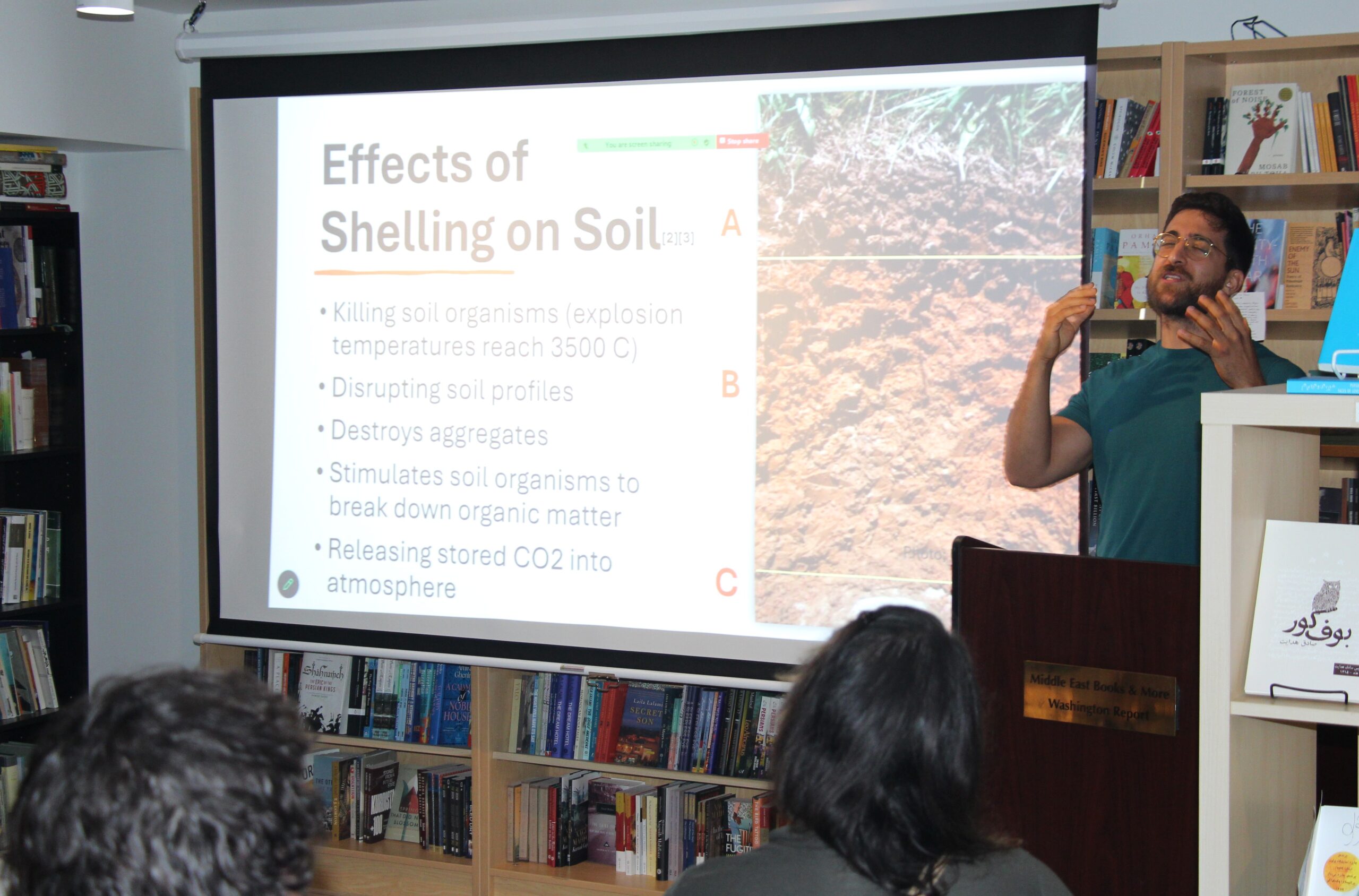
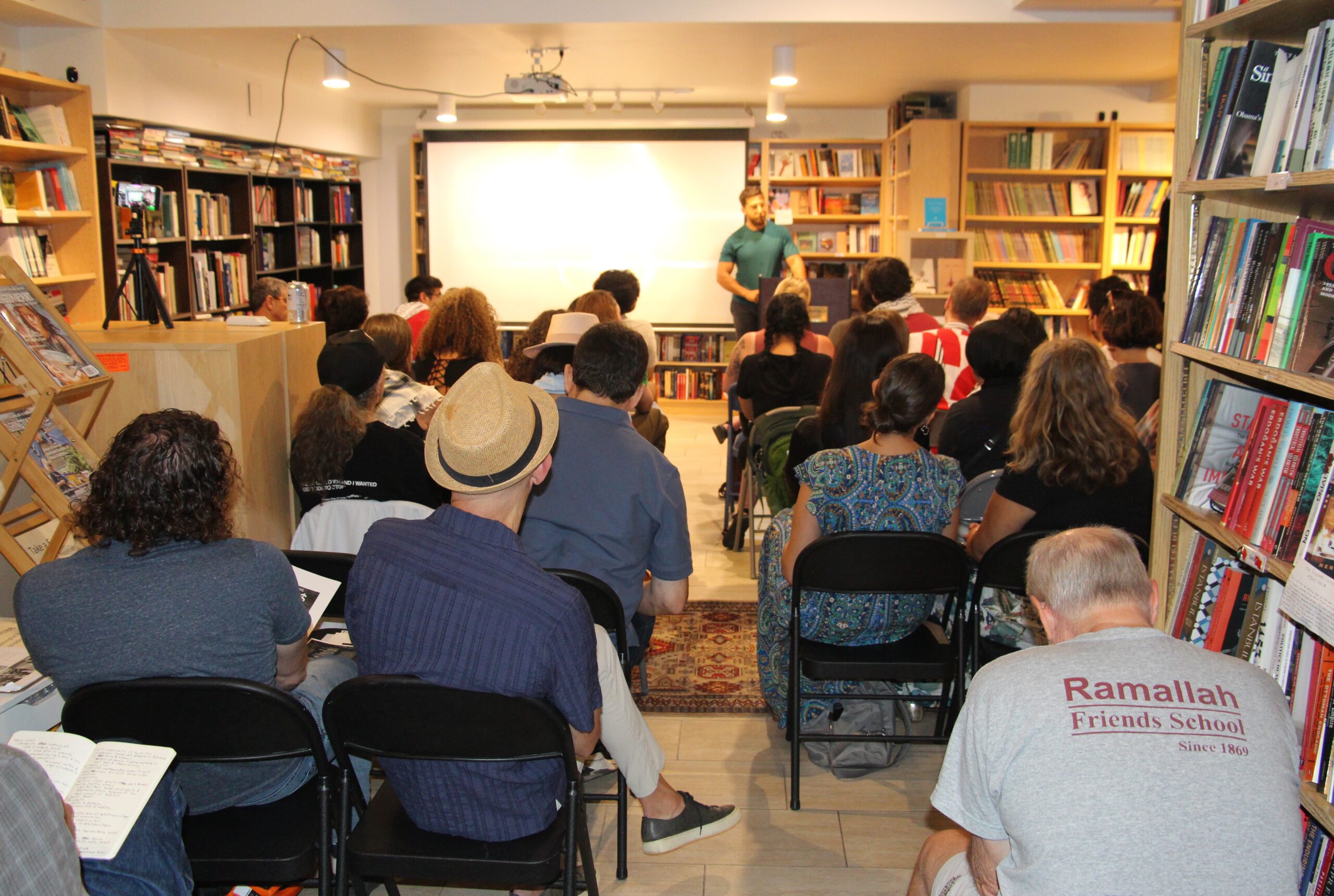
In September 3, Growing Palestine hosted an event at DC’s Middle East Books and More titled “Tortured Soil: Transforming a Thriving Ecosystem into a Wasteland.” It focused on the consequences of Israel’s genocidal Gaza war on the agricultural habitat in Palestine. Karim Gharbi, an entomologist and horticulturist affiliated with Colorado State University Denver, took the audience on a fascinating journey into one of the components of all agriculture that we often don’t think about—the soil in which things grow. Gharbi proved to be an excellent guide into that world, combining deep knowledge of his subject with an equally deep affection and respect for the ecosystem that sustains life.
Gharbi began his presentation with a description of a healthy soil ecosystem, arguing that you have to know what healthy soil looks like to understand the extent to which genocide eradicate it. Healthy soil is a complex system, teeming with parasites, fungi, and other organisms working in a well-choreographed dance to break down soil clusters and transform nitrogen to nourish living matter and keep the soil porous and oxygenated. War ravages that ecosystem and the crawly creatures in it. Soil destroyers include intense heat generated by explosions; toxins like white phosphorous, asbestos, and heavy metals released by bombs into the air, land, and water; and the compacting of soil by tank movement and tons of rubble from demolished buildings. When organisms in the soil are killed, the soil loses the ability to self-regulate and becomes unable to sustain agriculture.
Israel’s deliberate destruction of Palestine extends beyond Gaza and the West Bank. Israeli planes flying over southern Lebanon and Syria spray toxins over agricultural land. The only possible motive for this poisoning of farmland is to deny people the ability to feed themselves.
The presentation described the ways in which Israel’s attempt to control Palestinian land began soon after its 1948 conquest, which makes its greenwashing all the more repulsive: It is impossible to be environmentally friendly when your goal is to eradicate any trace of indigenous people and their deep-rooted relationship with their habitat.
The event ended with a light-hearted book launch of a poetry collection whose theme was the natural world. The author, Samar Najia, is a DC-area poet (and Growing Palestine board member); A Palestinian Rendezvous with Nature is her second collection published this year. The poems spring from Najia’s response to the natural world and its myriad life forms—with delight or alarm or wonder, depending on the critter in question—and her son’s dispassionate commentary on the verse, setting her straight on some details and adding others that only a devotee would know. Adding to the charm of the written dialog between mother and son was the presence of said son—Karim Gharbi—in the front row, having completed the presentation that opened the event and clearly enjoying Najia’s reading and light-hearted commentary on her verses. The poetry collection is available from Middle East Books and More.
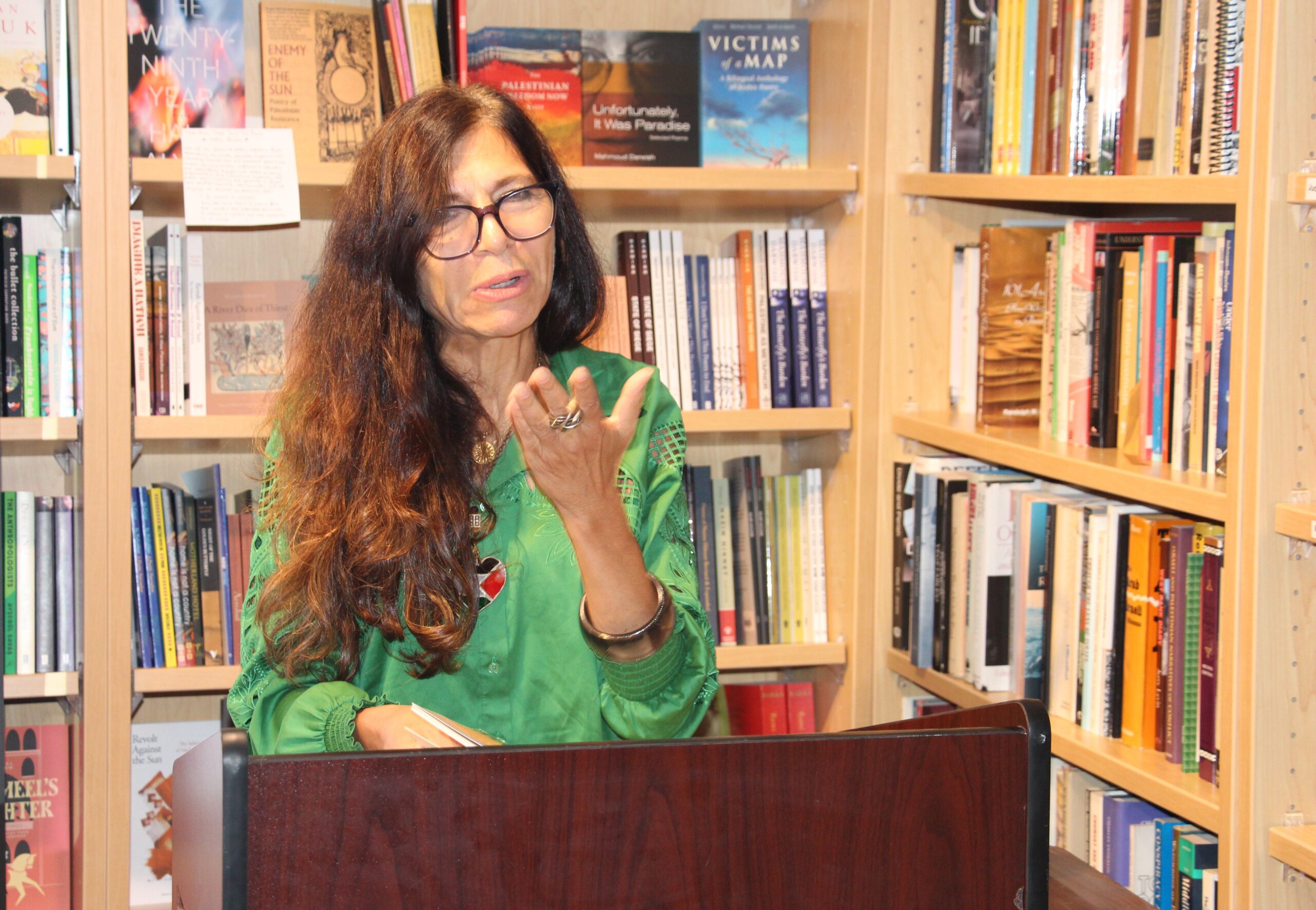
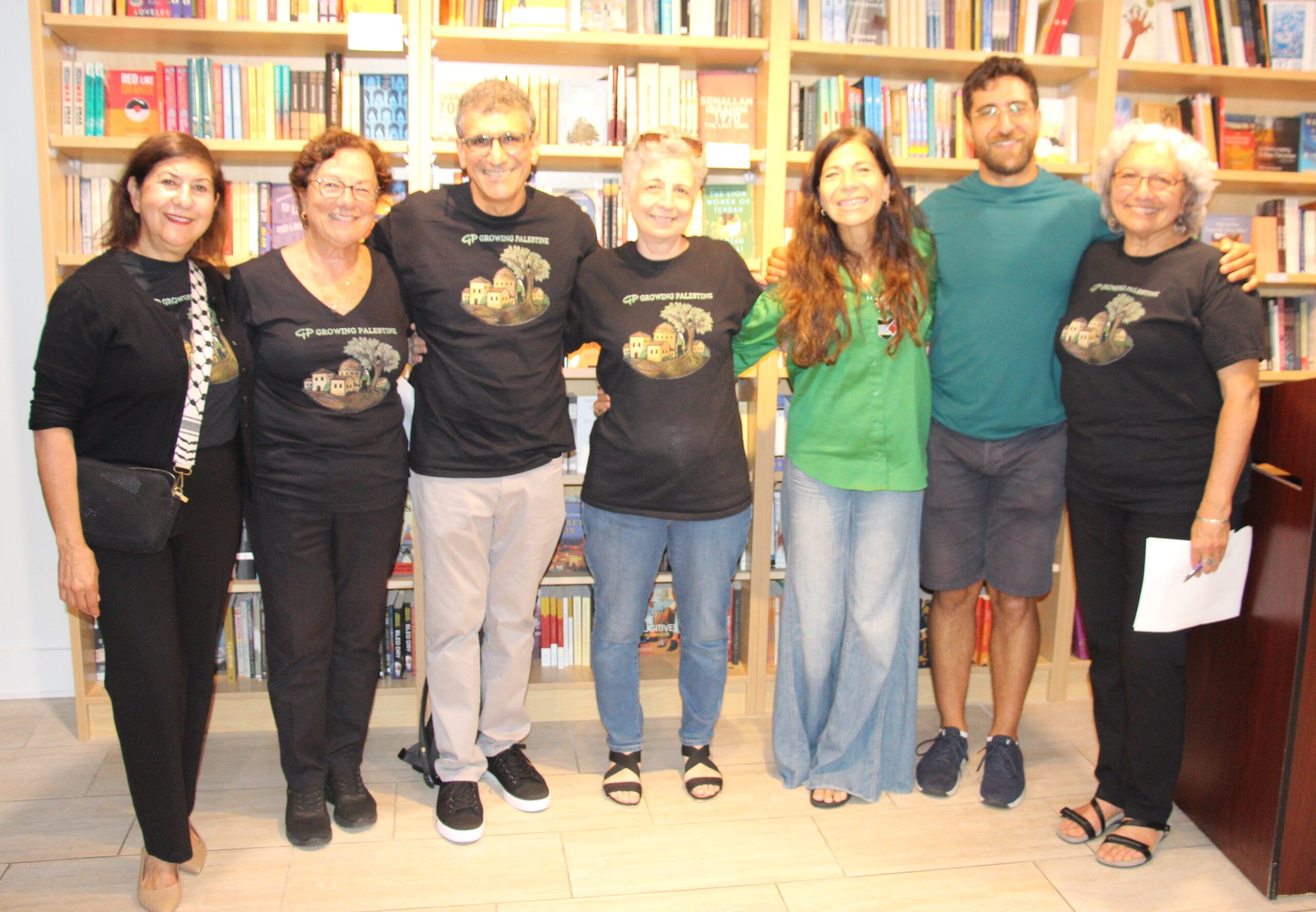
Photo credit: Jamal Najjab